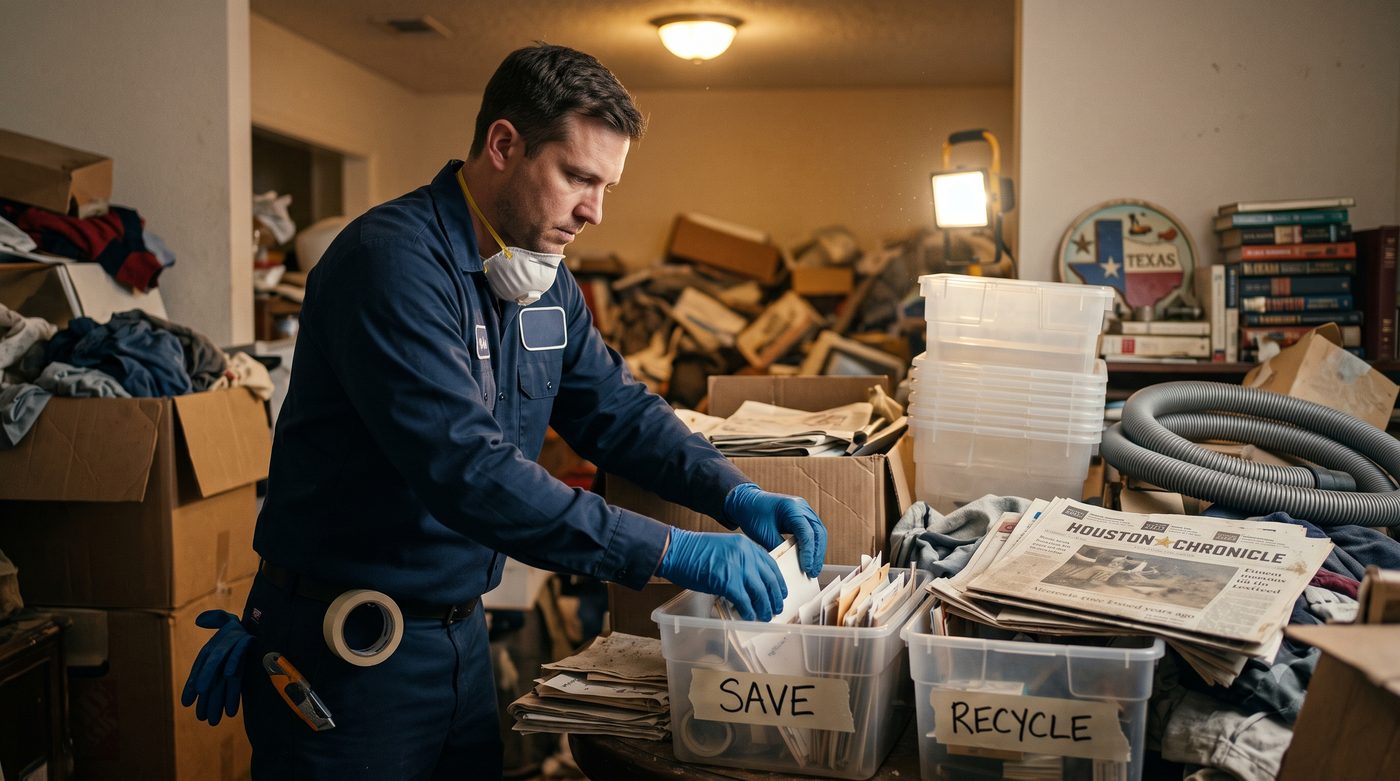
Handling Hoarding During an Active Tenancy
Discovering that a current tenant is hoarding puts Texas landlords in a difficult position: you have legal obligations to maintain habitable conditions, but you also face restrictions on entering the property and terminating the lease. Here's how to navigate it:
Document Everything First
Before taking any action, document the condition of the property as thoroughly as possible. If you become aware of hoarding through a complaint, a maintenance visit, or visible exterior conditions, photograph and note everything you can see from legally accessible vantage points.
Issue a Written Notice to Cure
Under Texas law, if a tenant is violating lease terms (most leases prohibit conditions that create health or safety hazards, or that damage the property), you can issue a written Notice to Cure or Quit. This gives the tenant a specific timeframe — typically 3–30 days depending on your lease language — to remedy the violation. Send via certified mail and keep a copy.
Conduct a Formal Inspection
Texas law allows landlords to enter rental property for inspections with reasonable notice (typically 24 hours). Use this to formally document conditions. If possible, bring a licensed inspector or contractor whose written assessment will be useful in any subsequent legal proceedings.
Your Legal Rights Under Texas Law
Eviction for Lease Violations
Texas Property Code Chapter 91 governs residential leases. If hoarding constitutes a material breach of the lease (creating health hazards, damaging property, violating health or safety codes), you can pursue eviction through the Justice Court in the county where the property is located. Texas has a relatively fast eviction process compared to many states — a hearing can often be scheduled within 10–21 days of filing.
Code Enforcement as Leverage
Reporting the property to city code enforcement (with your documentation) can create additional pressure on the tenant to remediate and creates a paper trail supporting your eviction case. In severe cases, the city may declare the property uninhabitable, which gives you additional grounds for lease termination.
Security Deposit Application
Under Texas Property Code § 92.109, you can apply the tenant's security deposit to legitimate damage beyond normal wear and tear — including hoarding damage. You must provide an itemized written statement within 30 days of the tenant vacating (or 30 days of your knowledge of their new address, whichever is later).
Civil Suit for Excess Damages
If damage exceeds the security deposit, you can sue in Texas small claims court (Justice Court) for amounts up to $20,000. For larger amounts, district or county court. Document everything thoroughly — your cleanup invoices, contractor estimates, and before/after photos are your evidence.
After Eviction: What to Do First
The day you regain possession of a hoarded property, your first priority should be assessment — not cleanup.
- Do a walkthrough and document before touching anything. Photos, video, and written notes of every room. This documentation is essential for your security deposit claim and any civil suit.
- Check for immediate safety hazards: gas leaks, structural hazards, active pest infestations, biohazard conditions. If there are immediate hazards, don't proceed without professional assessment.
- Call for a professional cleanup assessment. An experienced provider can assess severity level, give you a written estimate, and often begin work quickly. Call 877-552-8556 and mention you need a fast landlord turnaround — we prioritize these calls.
- Notify your insurance carrier. If the damage is tied to a covered event, file a claim promptly. Document the connection between any covered peril and the hoarding conditions.
- Contact your local code enforcement if violations were issued to be aware of any outstanding notices you'll need to resolve before re-renting.
Restoration Timeline and Process
The time to restore a hoarded rental property in Texas depends on severity. Realistic timelines:
- Level 1–2 (light hoarding): 1–5 days. Primarily junk removal and cleaning. Property can typically be re-rented within 1–2 weeks of cleanup completion.
- Level 3 (significant hoarding): 1–3 weeks for cleanup, plus additional time for any repairs. Total vacancy: 3–6 weeks.
- Level 4 (severe, biohazard): 3–8 weeks for cleanup and remediation, plus repair time. Total vacancy: 6–14 weeks minimum.
- Level 5 (extreme): 2–4+ months. May require partial or full interior rebuild after remediation.
Many Texas landlords underestimate the timeline for severe situations. Budget conservatively and set realistic expectations with any co-investors or lenders about the restoration period.
Typical Texas Restoration Costs
Hoarding cleanup is only part of the cost. Full restoration typically includes:
- Hoarding cleanup and junk removal: $1,500–$15,000+ depending on level
- Pest treatment: $300–$2,500 depending on type and extent of infestation
- Flooring replacement: $2,000–$12,000 depending on square footage and material
- Drywall repair or replacement: $500–$8,000
- Paint: $800–$3,500 for a full interior
- Appliance replacement: $500–$5,000 if appliances were damaged
- HVAC cleaning and service: $200–$1,500
- Lost rental income: Varies — at Texas median rent, every month of vacancy costs $1,500–$2,500+
Total restoration costs for a severe Level 4 Texas rental property can easily reach $30,000–$60,000 when all elements are included. This is why documentation for security deposit claims and civil suits is so important.
Recovering Costs from the Tenant
Realistically, full cost recovery from a tenant who caused hoarding damage is unlikely — many hoarding tenants have limited financial resources. However, there are legitimate steps worth pursuing:
- Apply the security deposit with a proper itemized statement (required within 30 days under Texas law)
- File in Justice Court for amounts up to $20,000 — Texas small claims is relatively fast and inexpensive to file
- Report to credit bureaus through a collection agency if you obtain a judgment
- Check landlord networks — many Texas cities have landlord associations that maintain tenant screening databases
Prevention: Lease Language and Inspections
The best protection against hoarding damage is catching it early. Practical prevention steps for Texas landlords:
Lease Language
Include specific language prohibiting: conditions that create health or safety hazards; accumulation of trash, debris, or personal property that restricts normal use of any room; conditions that attract pests; and property damage beyond normal wear and tear. Make violation of these terms a material breach justifying eviction.
Regular Inspections
Texas law allows landlord inspections with reasonable notice (typically 24 hours). Conduct a formal interior inspection at least annually — preferably twice a year for longer-term tenancies. Add interior inspection rights explicitly to your lease.
Shorter Lease Terms for Unknown Tenants
For tenants you don't have a track record with, start with a 6-month lease before converting to annual. This gives you an earlier opportunity to assess property condition and exit if needed.
Quick Response to Neighbor Complaints
A neighbor complaint about odors, pests, or visible hoarding is an early warning sign. Take it seriously and conduct an inspection promptly.